
Discover how to build high-intent B2B prospect lists in 2026 using buyer intent data, buying signals and accurate contact data to improve prospect targeting and identify the right accounts at the right time.
Building a prospect list used to be a relatively straightforward exercise. Choose a database, apply filters for industry and company size, export the contacts and start outreach.
The problem? A company that fits your target market is not necessarily looking for a solution. A contact with the right job title may no longer hold that position. And a database full of email addresses does not tell you which prospects deserve your attention first.
For B2B marketing teams, the challenge in 2026 is not simply finding more contacts. It is identifying the right accounts, understanding what makes them relevant now and reaching the people who can influence a buying decision.
That requires a more considered approach to prospect list building, combining buyer intent data, firmographic intelligence, account research and contact validation.
The goal is to move from collecting contacts to building a prioritised list of prospects with a credible reason to engage.
This guide breaks down why traditional list building is failing modern GTM teams and how industry leaders build high-intent prospect lists that consistently drive pipeline.
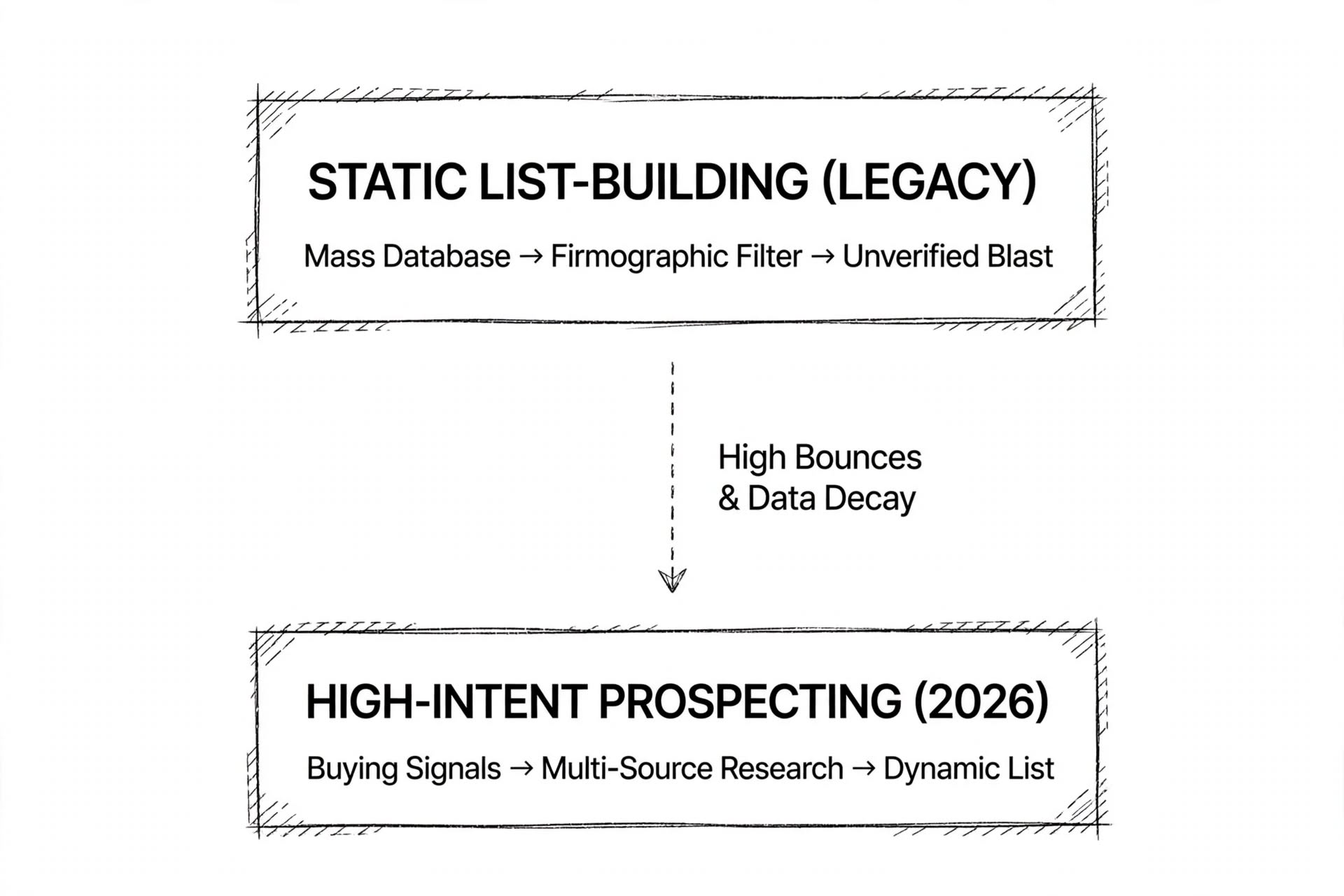
For years, the size of a contact database was often treated as a measure of market reach. More records meant more people to contact and, supposedly, more opportunities to generate.
But database coverage and buying relevance are two different things.
A company might match your industry and employee-count filters while having no immediate need for your solution. A contact might have the right title but work in a department that does not influence the purchase. Even when both are relevant, outdated information can make the record unusable.
These problems become more apparent when large lists move directly into automated outreach.
Firmographic filters help identify companies that fit your ideal customer profile (ICP). They do not establish whether those companies have an active business problem, are researching solutions or have a reason to change their existing approach.
A technology company with 500 employees might fit your target market. If it has no relevant need for your product, however, it should not automatically receive the same priority as an otherwise similar company actively evaluating solutions in your category.
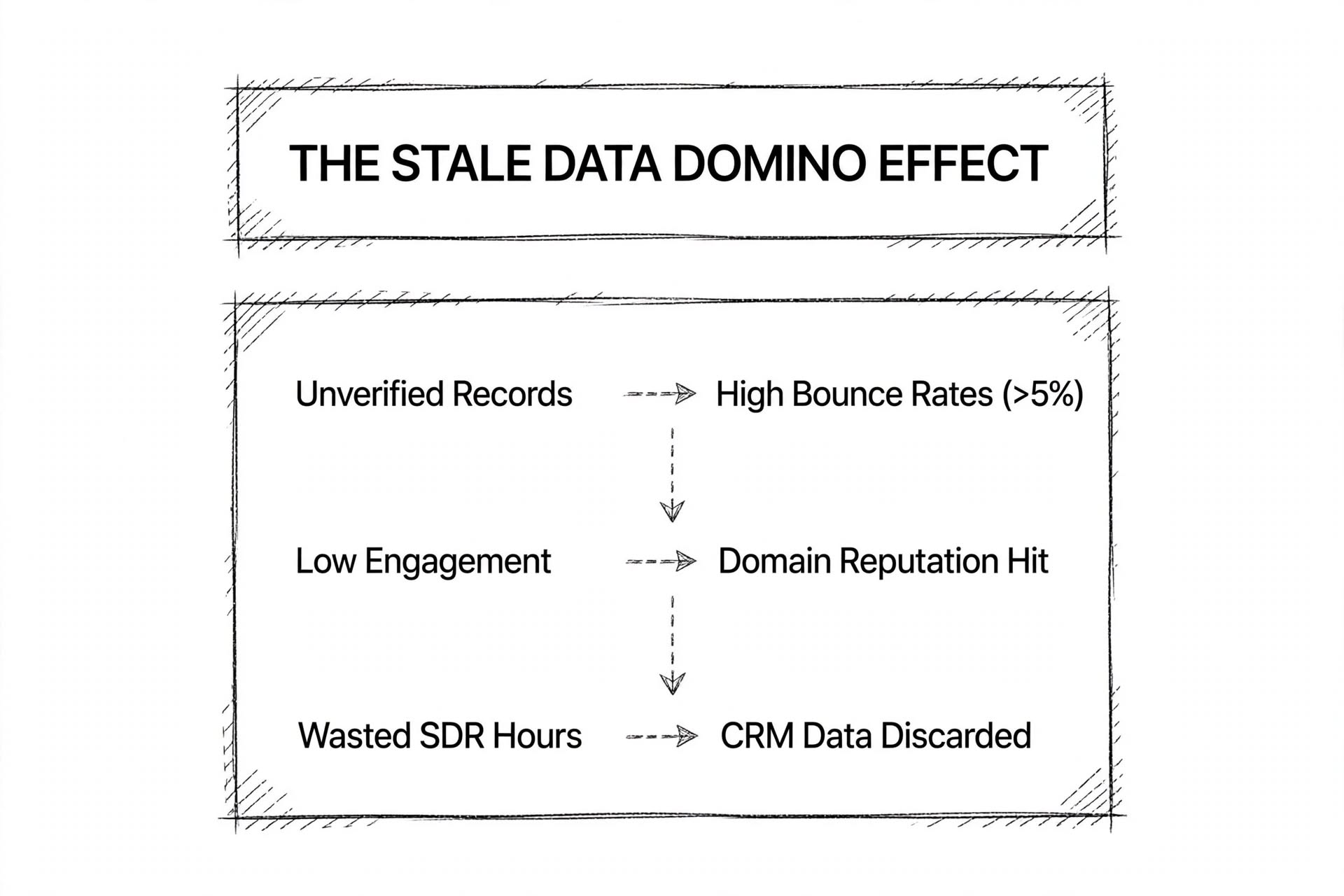
Job changes, reorganisations, acquisitions and changes in company structure can quickly make contact records inaccurate.
When marketing teams rely on outdated information, they risk reaching the wrong person, personalising messages around incorrect details and wasting time qualifying unsuitable contacts. These problems are not always visible when a list is exported. They often emerge only after campaigns begin.
Automation makes it easier to create personalised outreach at scale. But a message can be grammatically accurate and still be commercially irrelevant.
Referencing a company's recent expansion, for example, does not make an email useful unless that expansion creates a plausible need for the product being offered. The same applies to AI-assisted prospecting. Better messaging cannot compensate for an incorrect account, an irrelevant contact or a buying signal that has been misunderstood.
The first job of prospecting is to establish relevance. Personalisation comes afterwards.
High-intent list building replaces static data exports with real-time signal aggregation. Leading B2B teams build target lists by layering four core components:
Each layer answers a different question. Intent signals help prioritise potential opportunities, firmographic data establishes account fit, buying-group research identifies relevant people, and validation supports reliable outreach.
No single layer replaces the others.
Account-level intent signals can help identify companies that may be researching relevant solutions or showing signs of a potential buying need. Teams track first-party signals (website visits, content downloads) and third-party surge data (competitor research, category topic spikes) to identify accounts showing active buying signals.
Basic filters like "SaaS, 100-500 employees" yield lists that are too broad. High-intent list creation digs deeper into structural attributes:
B2B buying decisions involve multiple stakeholders. Rather than targeting a single contact title, modern teams map the entire buying unit:
The final layer checks whether the information used to qualify and contact an account is sufficiently reliable.
Automated data aggregators often accept the first matching value found in a database. High-intent workflows cross-reference records across live web sources, company announcements, and direct verification to confirm job title currency and email validity before campaign launch.
Not every company change represents a buying opportunity. The key is to recognise which signals could indicate a need your product can address.
First-party intent data comes from engagement with your own digital properties and marketing activities, subject to applicable tracking and privacy requirements.
Useful examples include:
The context matters. A single content download may indicate general research, while several relevant interactions combined with a consultation request provide stronger evidence of interest.
Even then, engagement should be interpreted alongside account fit and other available information.
Third-party intent data can provide insight into research activity beyond your own website. Depending on the provider, this may include aggregated interest in specific topics, categories or competing solutions.
For example, a company selling B2B contact data might prioritise accounts showing interest in data quality, contact verification or sales intelligence.
However, topic-level interest does not necessarily identify the individual conducting the research or confirm that the organisation is evaluating a purchase.
Use third-party intent signals to identify accounts worth investigating, rather than treating them as definitive buying indicators.
Business developments can provide useful context when they are connected to a specific use case.
Look for:
A hiring announcement, for instance, is not automatically a buying signal. It becomes relevant when the roles being recruited indicate a business requirement your product can help address.
Your existing CRM can reveal opportunities that external intent platforms may not capture.
Look for previously engaged accounts returning to your website, stalled opportunities becoming active again, multiple relevant contacts engaging with your content or prospects requesting information about a specific capability.
Check the context before assigning priority. An old opportunity or an interaction from a former employee should not automatically qualify an account as high intent.
Collecting signals is only the beginning. The next step is turning them into a researched, prioritised list that marketing and sales can act on.
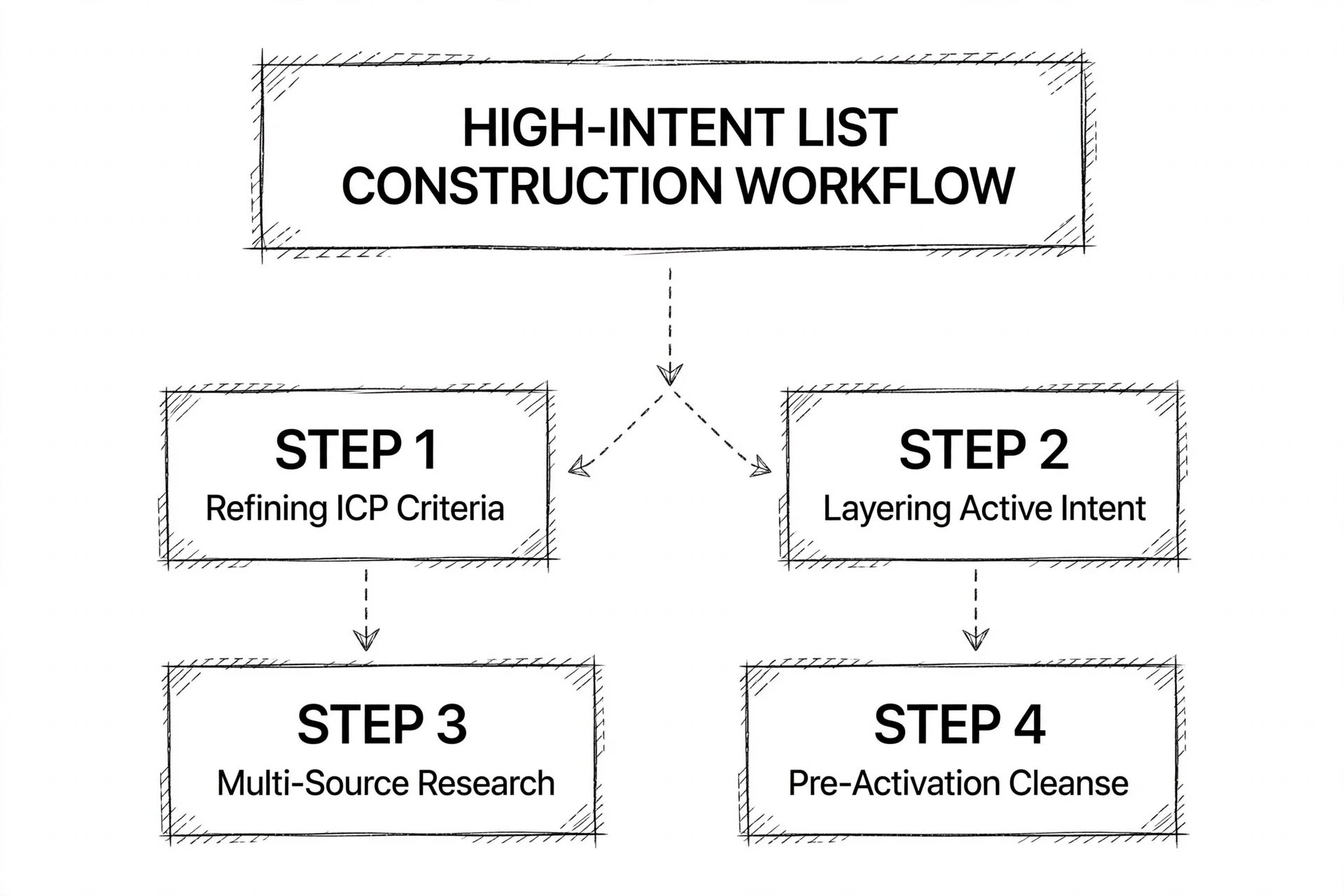
Examine closed-won opportunities from recent quarters. Identify non-obvious operational characteristics shared by your fastest-closing deals. Look for specific software implementations, team expansions, or recent leadership hires.
Filter your starting list of matching accounts by active buying behavior. Focus outbound resources on accounts exhibiting multiple intent signals within a 30-day window.
Confirm contact details against live, current sources. Verify that job functions match your buyer requirements and resolve conflicting data points between professional profiles and corporate directories.
alidating contact details is an essential part of preparing a high-intent prospect list for outreach. Before adding records to an email campaign, check email validity and identify addresses that may pose a deliverability risk.
Email verification, however, is only one part of the process. Catch-all addresses, for example, may accept mail at the domain level without confirming whether a specific mailbox exists. These records should be assessed according to the available verification evidence rather than automatically treated as invalid.
Merit's proprietary four-layer email bounce checks help identify potential deliverability risks before campaign activation. Combined with live contact research and multi-source validation, this helps marketing teams prepare more reliable, campaign-ready contact lists.
Buyer intent data can help identify accounts worth investigating. Contact databases can help locate potential decision-makers. Neither automatically establishes whether the account, contact and business context are suitable for your campaign.
Researched B2B data addresses this gap by starting with the criteria that matter to your ICP.
Relevant sources may include company websites, professional profiles, business announcements, hiring information and other suitable public records. Researchers use these sources to validate account attributes, identify relevant contacts and investigate inconsistencies.
This approach is particularly useful when:
Research does not replace buyer intent data. It helps establish whether the accounts and contacts behind your prospecting decisions are relevant and reliable.
A prospect may match your ICP and show relevant buying signals, but that does not automatically make the contact record ready for outreach.
An outdated email address, an incorrect job title or an unverified contact can undermine an otherwise well-targeted campaign. That is why prospect qualification and email verification should be treated as separate but complementary steps.
Account research helps establish whether a company and contact are relevant to your campaign. Email verification helps assess whether the address is suitable for activation. Both contribute to a more reliable prospecting process, although neither guarantees inbox placement or eliminates every bounce.
At Merit Data & Technology, we believe a pre-existing database should not determine which prospects belong in your campaign.
Our marketing data service starts with your brief. We research companies and contacts against your ICP, using relevant sources to establish account fit and validate the information your team needs.
Our database size is zero. We do not maintain a stock pool of contacts and sell you a segment from it.
Depending on your requirements, research can cover company information, relevant decision-makers, firmographic details, business context and contact information. Automation and AI support scale and speed, while trained researchers assess the information that determines relevance.
Proprietary four-layer email bounce checks form part of our contact validation process, helping identify potential deliverability risks before campaign activation. Combined with live research and multi-source validation, this helps us prepare researched, CRM-ready contact data around your ICP and campaign requirements.
Whether you are building a new prospect list or reviewing one created through existing tools, the aim is the same: to give your marketing and sales teams a more reliable basis for prioritising accounts and starting relevant conversations.
Want to build a prospect list around your actual ICP? Talk to Merit's Marketing Data team to discuss a researched B2B contact list built around your target market and campaign requirements.
Static lists pull contacts from pre-collected database snapshot files. High-intent prospect lists dynamically combine target account fit with active behavioral signals, real-time research, and live verification.
Intent signals indicate when an account is actively researching solutions. Reaching buyers while they are in-market increases connection rates and shortens sales cycles.
Target a hard bounce rate below 2%. Exceeding 5% in a calendar month risks sender domain flags and platform suspensions from major providers like HubSpot.
Priority accounts and active campaign lists require real-time validation prior to launch. Broad CRM contact databases should undergo routine quarterly verification to combat decay.
ICP fit establishes whether a company matches your target customer profile. Buying intent provides evidence that the company may have a relevant current need. A strong prospect list considers both rather than treating every suitable company as an immediate sales opportunity.
Useful signals can include relevant website engagement, category research, consultation requests, business expansion, relevant hiring activity, leadership changes and technology initiatives. The best signals depend on your product and sales cycle and should be assessed for relevance, recency and reliability.
They serve different purposes. Large contact databases help teams discover potential buyers and map a market. High-intent prospect lists prioritise accounts using ICP fit, relevant buying signals and validated contact information. For focused demand generation, account relevance and data quality can be more useful than record volume alone.

